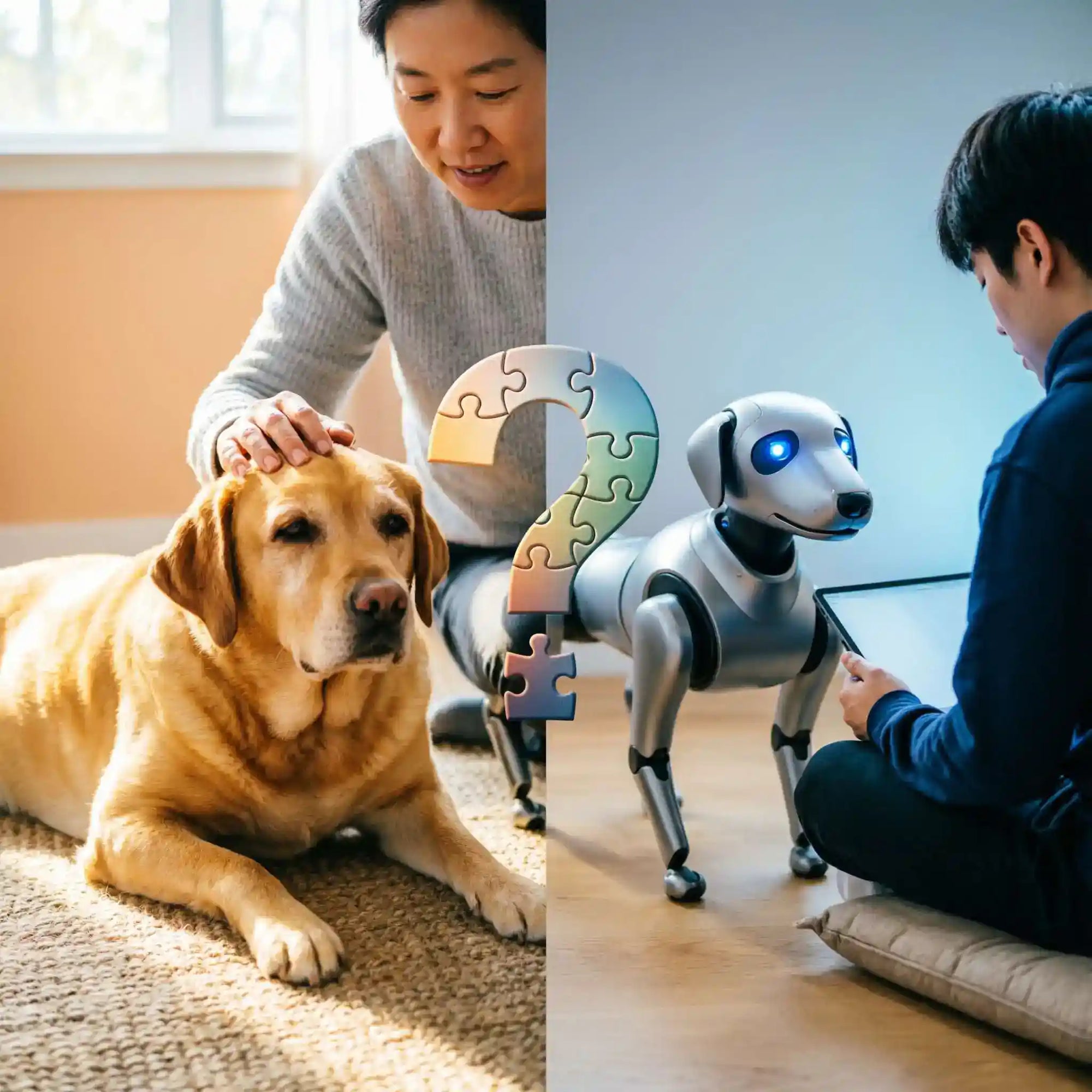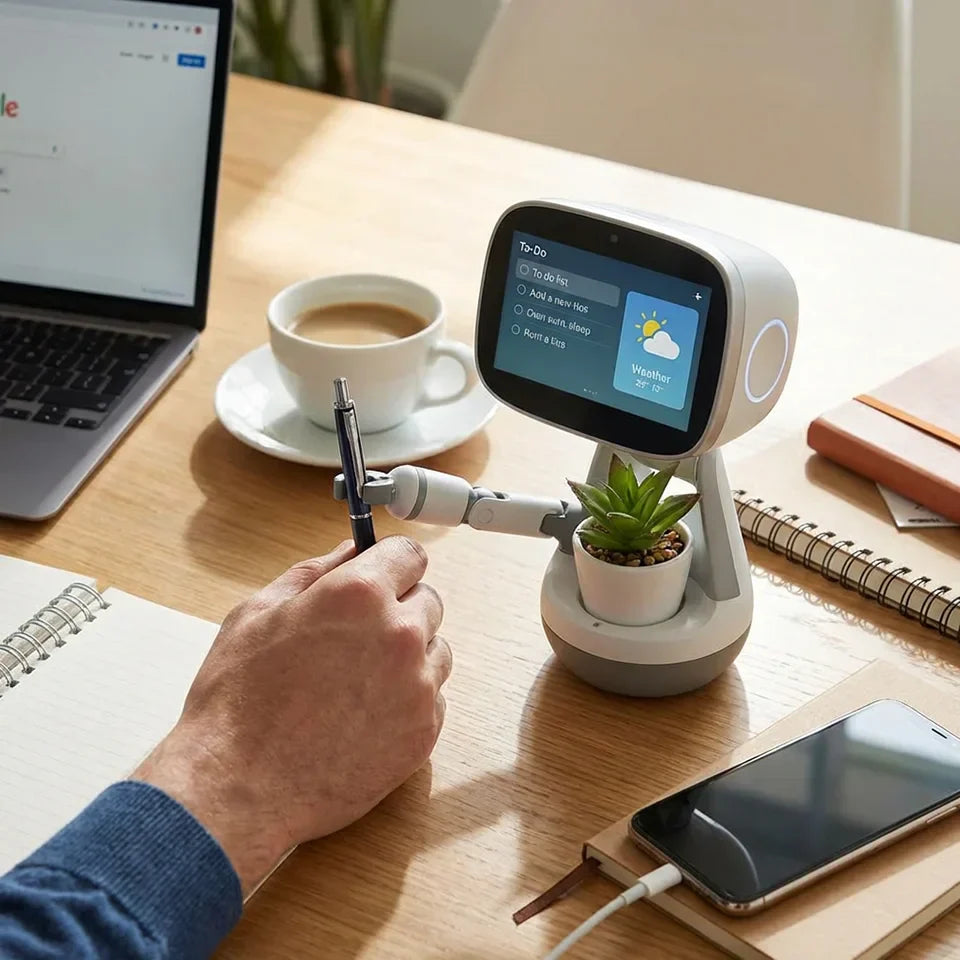


If AI is going to become part of daily life, it cannot stay trapped inside a screen. That is where embodied AI starts to matter.
For many people, today’s AI still feels useful but distant: chatbots answer questions, voice assistants set timers, and apps generate content. But when it comes to home life, people often want something more natural—something that can sense, react, move, and build a feeling of presence over time. That shift is exactly why embodied AI is becoming one of the most important ideas in consumer robotics.
In home robots and AI companions, embodied AI changes the relationship from “command and response” to “ongoing interaction.” Instead of acting like a tool you open only when needed, an embodied system can become a more visible, responsive part of everyday routines.
What Is Embodied AI?
Embodied AI refers to artificial intelligence that exists in a physical form and interacts with the real world through sensing, movement, and feedback. In simple terms, it is AI that does not just process information—it experiences an environment and responds within it.
That physical dimension matters. A system with embodiment can combine:
- visual input
- audio input
- spatial awareness
- motion or expressive action
- real-time environmental feedback
This is what makes embodied AI especially relevant for home robots and AI companions. The robot is not only “smart” in the abstract. It can appear in your space, notice context, and respond in a way that feels more immediate and intuitive.
Why Is Embodied AI Different From Traditional AI?
Traditional AI often operates in a narrow interaction format. You type a prompt, speak a command, or click a button. The AI responds, but it usually has limited awareness of what is happening around you.
Embodied AI introduces a different loop:
- It perceives the environment.
- It interprets context.
- It acts or reacts physically or behaviorally.
- It updates based on new feedback.
That may sound subtle, but it changes the user experience significantly.
Traditional AI vs embodied AI
| Dimension | Traditional AI | Embodied AI |
| Interface | Text, voice, app | Physical device in real space |
| Awareness | Limited context | Environment-aware interaction |
| Output | Answers or commands | Behaviors, movement, expressions, responses |
| Relationship style | Task-based | Task + presence + interaction |
| Use pattern | On demand | Ongoing, ambient, habitual |
For users, the difference is not just technical. It is emotional and behavioral. A screen-based AI can be efficient. An embodied AI companion can feel present.
How Does Embodied AI Actually Work in Home Robots?
To understand why embodied AI is gaining attention, it helps to break it into three layers: perception, intelligence, and action.
1. Perception: how the robot senses the world
A home robot needs some way to understand what is happening around it. Depending on the product, this may include:
- cameras for visual recognition
- microphones for voice input
- sensors for proximity, touch, or motion
- contextual signals such as time, user behavior, or interaction history
This allows the robot to do more than wait for a command. It can detect that someone is nearby, distinguish between quiet and active moments, or recognize repeated patterns in usage.
2. Intelligence: how the robot interprets context
This is where AI models, memory systems, and multimodal reasoning matter. The system may combine:
- language understanding
- emotional or conversational cues
- routine awareness
- interaction history
- decision logic for when and how to respond
For example, a companion robot may learn that a user tends to check in at certain hours, respond differently during work time versus leisure time, or adjust its tone and behavior based on ongoing interaction patterns.
3. Action: how the robot responds in the real world
In embodied AI, “action” does not always mean heavy-duty physical labor. In consumer home robots, action may be much lighter but still meaningful:
- turning toward the user
- moving across a desk or room
- using sound and expressive behavior
- reacting to touch or voice
- initiating a playful or helpful interaction
That is especially important in AI companions. Sometimes the most valuable action is not completing a chore. It is creating a richer feeling of responsiveness and connection.
What Can Embodied AI Robots Do in Everyday Life?
Many consumers still imagine home robots in extremes: either a vacuum robot or a futuristic humanoid assistant. In reality, embodied AI can add value in smaller, more practical ways first.
1. Provide interactive companionship during the day
For remote workers, solo professionals, and tech enthusiasts, part of the appeal is not utility alone. It is interaction.
A desktop or home companion robot can:
- acknowledge presence
- respond to voice and touch
- create moments of play or light emotional relief
- reduce the “coldness” of purely screen-based digital tools
This matters because many people do not want another dashboard. They want a product that feels alive enough to engage with.
2. Support lightweight routines and reminders
Embodied AI is well suited for small recurring tasks, such as:
- routine reminders
- simple check-ins
- lightweight productivity nudges
- contextual interactions tied to daily habits
These are not dramatic capabilities, but they can be sticky. In consumer tech, repeated low-friction usefulness often matters more than one impressive demo.
3. Make AI interaction feel more intuitive
People generally respond more naturally to systems that show timing, direction, and behavioral feedback. A robot that turns, pauses, reacts, or “looks” attentive can communicate more than a speaker that only outputs sound.
This makes the interaction feel less transactional and more conversational.
4. Add entertainment and personality to the home
Entertainment is often underestimated in product evaluation, but it is one of the strongest drivers of long-term engagement. A companion robot with expressive behaviors, playful responses, and a recognizable personality can create ongoing interest in a way many utility-first devices do not.
That is especially relevant in categories like:
- desk companions
- family-friendly home robots
- interactive AI pets
- lifestyle robotics

Embodied AI vs Smart Speakers: Which Feels More Useful?
A useful comparison is the smart speaker. Voice assistants introduced millions of users to AI-like interaction, but their limitations also became clear.
Smart speakers are efficient, but narrow
They are good at:
- timers
- weather
- music
- simple commands
But they often feel passive and one-dimensional. They do not create much sense of shared space or ongoing presence.
Embodied AI companions create a different value layer
A home robot or desk companion may not replace every utility device. Instead, it can introduce a richer mix of:
- interaction
- visibility
- expressiveness
- personal attachment
- ongoing engagement
In other words, smart speakers optimize convenience. Embodied AI products can optimize relationship quality in addition to utility.
For many consumers, that difference is what makes AI companions compelling.
How Should You Evaluate an Embodied AI Companion Before Buying?
If you are considering a product in this category, do not focus only on the AI label. Use a broader decision framework.
1. Start with your real use case
Ask:
- Do I want productivity support, companionship, entertainment, or all three?
- Will this live on my desk, in my living room, or in a shared family space?
- Do I want an assistant, a companion, or a playful smart device?
A product feels much more valuable when its role is clear.
2. Look at interaction quality, not just feature count
A long feature list can look impressive, but daily experience depends on:
- responsiveness
- personality consistency
- smoothness of interaction
- contextual relevance
- how often you actually want to engage
3. Check whether the product can improve over time
Embodied AI is still evolving. A strong product should show signs of long-term growth through:
- software updates
- new interactions
- better contextual understanding
- expanding companion behaviors
4. Review privacy design carefully
Look for clarity around:
- camera and microphone use
- data controls
- consent settings
- local vs cloud processing where applicable
5. Evaluate long-term fit, not launch-week excitement
The right embodied AI companion is not necessarily the one with the flashiest demo. It is the one that fits your environment and remains enjoyable or useful after novelty fades.
For users interested in a more approachable entry point into this category, products such as Loona Deskmate can be especially relevant because they connect embodied interaction with a more personal, desk-centered lifestyle experience. That positioning can make the category easier to understand: not a humanoid fantasy, but a practical and emotionally engaging AI presence built for everyday space.
What Does the Future of Embodied AI Look Like?
Embodied AI is likely to evolve in stages.
From reactive devices to contextual companions
Today, many products still depend on short interaction loops. The next step is more continuity—systems that remember patterns, adapt behavior, and respond with better timing.
From isolated features to integrated experience
Consumers do not think in technical modules. They care whether a product feels coherent. Over time, the winners in embodied AI may be the products that combine AI, design, expression, and daily usefulness into one experience.
From novelty hardware to everyday category
The biggest shift will happen when embodied AI products stop being seen as experimental gadgets and start being viewed as normal digital companions in homes and workspaces.
That shift will not happen because of one breakthrough alone. It will come from better interaction design, clearer value, and more believable everyday use cases.
Conclusion
Embodied AI is transforming home robots and AI companions by enabling them to perceive, react, and interact in the real world. Unlike traditional AI, it combines intelligence with physical presence, making robots more natural, engaging, and useful in everyday life. As this technology evolves, embodied AI is likely to become a core driver of next-generation consumer robotics.
FAQ
What is embodied AI in simple terms?
Embodied AI is artificial intelligence that exists in a physical device and interacts with the real world through sensing, movement, and feedback. Unlike software-only AI, it can respond within a shared physical environment.
How is embodied AI different from generative AI?
Generative AI mainly creates text, images, audio, or code based on prompts. Embodied AI uses intelligence inside a physical system, allowing it to perceive surroundings, react to real-world context, and perform interactive behaviors.
Why is embodied AI important for home robots?
Because homes are dynamic environments. Home robots need to understand people, context, timing, and space—not just answer commands. Embodied AI helps robots become more responsive, interactive, and useful in daily life.
Are AI companions the same as home robots?
Not always. A home robot may focus on utility, while an AI companion emphasizes interaction, personality, and ongoing engagement. Some products combine both roles.